
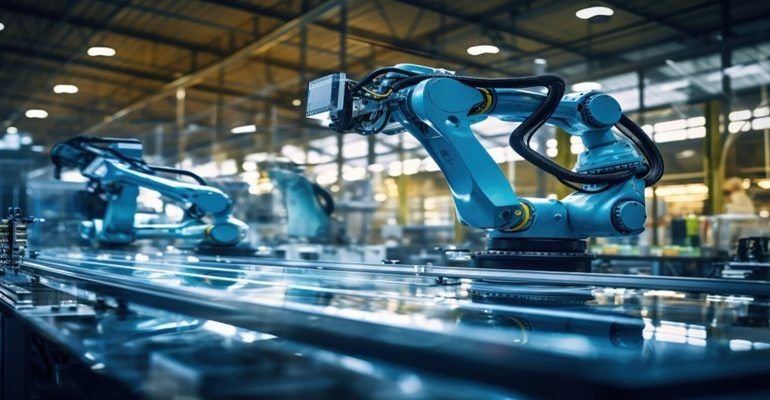

Artificial intelligence is no longer a futuristic concept reserved for Silicon Valley labs. In 2026, AI applications across industries have become a concrete, measurable business reality — from the hospital room to the farm field, from the trading floor to the classroom. According to Stanford HAI’s 2026 AI Index, 78% of organizations reported using AI in 2025, up sharply from 55% the previous year. And McKinsey’s latest survey shows that 92% of companies plan to increase their AI budgets within three years.
But what does AI actually do in each sector? Beyond the hype, what are the real use cases, the measurable gains, and the pitfalls to avoid? This guide breaks down the most impactful AI applications across 10 different industries — with concrete examples, key stats, and forward-looking insights for both beginners and seasoned practitioners.
[LIEN INTERNE : What is Artificial Intelligence? A Beginner’s Guide]
Why AI Is Reshaping Every Industry in 2026
Before diving into the specifics, it’s worth understanding why AI adoption is accelerating so dramatically across all sectors simultaneously. Three forces are converging:
- Cheaper compute: The cost of training and running AI models has dropped by orders of magnitude over the past five years.
- Data abundance: Every industry is now generating more structured and unstructured data than ever before — and AI thrives on data.
- Generative AI maturity: Tools like large language models (LLMs) have moved from research labs to enterprise production, unlocking new possibilities in knowledge work.
The result? Industries that have embraced AI are seeing labor productivity grow 4.8x faster than the global average, and sectors with high AI exposure show three times higher revenue growth per worker compared to slower adopters.
Let’s explore the 10 industries where this transformation is most visible.
1. Healthcare – AI That Saves Lives
Healthcare is arguably the highest-stakes arena for AI adoption — and one of its most active. The combination of massive datasets (patient records, medical images, genomics), clear outcomes to optimize (survival rates, misdiagnosis reduction), and growing administrative burden makes it a perfect environment for intelligent automation.
Medical Imaging and Diagnostics
AI-powered diagnostic tools can analyze X-rays, MRIs, and CT scans with accuracy that rivals — and in some tasks exceeds — experienced radiologists. Google’s DeepMind, for example, developed an AI system capable of detecting over 50 eye diseases from retinal scans. In oncology, computer vision models flag suspicious lesions at early stages when treatment is most effective.
Key benefit: Faster, more accessible diagnostics — especially critical in underserved regions with few specialists.
Drug Discovery and Development
Traditional drug development takes 10–15 years and costs over $1 billion per approved molecule. AI is compressing this timeline dramatically. AlphaFold (DeepMind) revolutionized protein structure prediction, while generative AI models now propose novel molecular candidates in days rather than years.
Administrative Automation
Beyond clinical applications, AI is tackling the paperwork mountain: automated medical coding, appointment scheduling, claims processing, and EHR data entry. These tasks consume up to 30% of healthcare workers’ time — and AI is giving that time back.
[LIEN INTERNE : AI in Healthcare: Use Cases and Regulatory Challenges]
2. Finance and Banking – Smarter Money, Faster Decisions
Finance was one of the earliest industries to adopt machine learning, and it now sits at the frontier of AI deployment. Data is abundant, stakes are high, and decisions are measurable — making it an ideal laboratory for AI systems.
Fraud Detection and Security
Every second, banks process thousands of transactions. AI models analyze these transactions in real time, comparing patterns against baseline behavior to flag anomalies. Systems built on machine learning can catch fraud patterns that rule-based systems entirely miss — reducing financial losses while cutting false positives that frustrate legitimate customers.
Algorithmic Trading and Risk Management
AI-driven trading systems now account for a significant share of equity market volume. These models ingest news feeds, financial reports, macroeconomic data, and historical prices simultaneously — making split-second trades on insights humans couldn’t process at the same speed. On the risk side, predictive models assess credit risk by analyzing hundreds of variables, continuously refining their assessments as new data arrives.
Personalized Banking and Financial Advice
Retail banks are deploying AI-powered chatbots and recommendation engines that tailor product offerings to individual customers — suggesting savings plans, flagging unusual spending, or warning of overdraft risk before it happens. This moves banking from a transactional relationship to a genuinely advisory one.
[LIEN INTERNE : AI in Fintech: Fraud, Credit Scoring, and the Future of Wealth Management]
3. Manufacturing – The Rise of Smart Factories
Manufacturing is undergoing its deepest transformation since the introduction of the assembly line. 51% of manufacturers reported using AI in some form in 2026, and those leveraging machine learning are three times more likely to improve their key performance indicators.
Predictive Maintenance
Instead of waiting for equipment to break down — or replacing parts on a fixed schedule regardless of their actual condition — AI models monitor sensor data in real time to predict failures before they occur. The result: dramatically fewer unplanned outages, lower maintenance costs, and extended equipment lifespan. 72% of manufacturers report reduced costs and improved operational efficiency after deploying AI tools.
Quality Control with Computer Vision
AI-powered cameras inspect products on the production line at speeds impossible for human workers, detecting surface defects, dimensional errors, or assembly mistakes with sub-millimeter precision. Unlike human inspectors subject to fatigue, these systems maintain consistent accuracy across 24/7 operations.
Supply Chain and Production Optimization
From demand forecasting to logistics routing, AI is optimizing the entire value chain. BMW, for instance, uses AI and digital twins to simulate thousands of supply chain configurations, identifying the most efficient distribution strategies before committing to physical changes.
4. Retail and E-Commerce – AI-Powered Shopping Experiences
Retail has embraced AI at every touchpoint of the customer journey — from the moment a shopper searches for a product to the final mile of delivery. The competitive stakes are enormous: personalization and speed are now table stakes.
Hyper-Personalized Recommendations
Recommendation engines — the technology behind “customers also bought” and “you might like” suggestions — are powered by collaborative filtering and deep learning models. Amazon reportedly attributes up to 35% of its revenue to its recommendation engine. These models analyze browsing history, purchase patterns, and contextual signals in real time.
Inventory and Demand Management
AI forecasting models allow retailers to reduce both overstock (costly to store and discount) and stockouts (lost sales, damaged loyalty). By analyzing seasonal patterns, local events, and external signals like weather, these systems give supply chain teams a much more accurate picture of future demand.
Customer Service Automation
Conversational AI is replacing first-line customer support for returns, tracking requests, and FAQs — handling millions of interactions simultaneously without wait times. The best implementations use AI for routine queries while seamlessly escalating complex issues to human agents.
5. Education – Personalized Learning at Scale
Education has historically been a one-size-fits-all enterprise. A teacher in front of 30 students cannot adapt their pace and style to every learner. AI is changing that equation — at scale, and at a fraction of the cost of individual tutoring.
Adaptive Learning Platforms
AI-powered platforms like Duolingo, Khan Academy, or Coursera’s recommendation engine continuously assess a learner’s knowledge gaps and adjust content difficulty, pacing, and exercise type accordingly. The system learns what works for each individual. Studies show adaptive learning can accelerate skill acquisition by 40–60% compared to traditional instruction.
AI Tutors and Automated Grading
Large language models are increasingly serving as on-demand tutors — answering questions, explaining concepts in multiple ways, and providing instant feedback on written assignments. For educators, automated grading of essays and short answers (beyond multiple-choice) frees time for high-value human interactions: discussion, mentorship, and creative projects.
Important nuance: AI in education raises significant questions around academic integrity, data privacy for minors (especially critical under GDPR in Europe), and the risk of widening the digital divide if access is unequal.
[LIEN INTERNE : AI Tools for Teachers: Practical Guide for 2026]
6. Transportation and Logistics – Moving Smarter
The global AI in logistics market was valued at nearly $18 billion in 2025 and is projected to exceed $26 billion by the end of 2026 — with a staggering 44.4% CAGR forecast through 2034. Transportation is one of the sectors where AI creates the most immediate, quantifiable ROI.
Route Optimization and Last-Mile Delivery
AI algorithms process traffic data, weather conditions, delivery time windows, and vehicle capacities in real time to generate optimal routes. Companies like UPS and FedEx have reported saving hundreds of millions of dollars annually through AI-driven route optimization. For last-mile delivery — the most expensive leg of any shipment — AI is particularly transformative.
Autonomous Vehicles and Drones
Self-driving vehicles combine computer vision, sensor fusion, and reinforcement learning to navigate complex environments. While full autonomy remains a work in progress on public roads, autonomous forklifts, warehouse robots, and guided vehicles are already commonplace in controlled industrial environments. Drone deliveries are being piloted for medical supplies in rural areas across multiple continents.
Demand Forecasting and Fleet Management
Logistics companies use AI to predict shipment volumes, optimize fleet utilization, and anticipate bottlenecks — particularly valuable during peak seasons like Black Friday or the holiday rush.
7. Energy – Toward a Smarter, Greener Grid
The energy sector faces a dual challenge: maintaining reliability while integrating increasingly intermittent renewable sources. AI is emerging as a critical enabler of both goals — and of the broader energy transition.
Predictive Maintenance for Infrastructure
Power plants, wind turbines, and oil & gas facilities share a common challenge: expensive equipment that must operate reliably. AI models monitoring vibration, temperature, and performance data can predict component failure weeks in advance — preventing costly outages and safety incidents.
Renewable Energy Optimization
Solar and wind power output depends on weather conditions that are difficult to predict with precision. AI forecasting models significantly improve the accuracy of renewable generation predictions, allowing grid operators to balance supply and demand more effectively. Google’s DeepMind, for instance, used ML to improve the value of wind energy output by approximately 20% by optimizing delivery timing.
Smart Grid Management
AI-powered smart grids dynamically adjust electricity distribution based on real-time consumption patterns, reducing waste and improving resilience. They also enable demand-response programs that incentivize consumers to shift usage away from peak periods.
8. Agriculture – Precision Farming with AI
Agriculture feeds the world, yet it remains one of the most challenging industries to manage: subject to weather uncertainty, biological variability, and thin margins. AI-powered precision agriculture is transforming how farmers make decisions — moving from intuition and tradition to data-driven management.
Crop Monitoring and Disease Detection
Drones equipped with multispectral cameras and computer vision algorithms can survey thousands of hectares in hours, detecting signs of drought stress, nutrient deficiency, or fungal infection before they become visible to the naked eye. Early detection translates directly into yield protection and reduced pesticide usage.
Autonomous Machinery and Irrigation
AI-guided tractors, planters, and harvesters operate with centimeter precision using GPS and computer vision, reducing overlap and waste. Smart irrigation systems combine weather forecasting, soil moisture sensors, and AI to deliver exactly the right amount of water at the right time — reducing water consumption by up to 30% in some deployments.
Market Price Prediction and Yield Forecasting
Predictive models help farmers and cooperatives anticipate yield and market prices, enabling better financial planning and negotiation with buyers.
9. Legal – AI in the Courtroom and Beyond
The legal industry, known for its deep conservatism around process and precedent, is nonetheless experiencing rapid AI adoption — particularly in high-volume, document-intensive tasks where speed and accuracy are both critical.
Contract Analysis and Due Diligence
Contract review is one of the most time-consuming tasks in legal work. NLP-powered tools can analyze thousands of contracts in hours, flagging non-standard clauses, missing provisions, and risk factors that might take a team of junior lawyers days to identify. In M&A transactions, AI accelerates due diligence from weeks to days.
Legal Research Automation
LLM-based legal research tools can scan vast case law databases, identify relevant precedents, and summarize findings in plain language — a task that previously consumed significant billable hours. Platforms like Harvey AI and Casetext (now part of Thomson Reuters) are already used by major law firms.
Compliance and Regulatory Monitoring
For corporations operating across multiple jurisdictions, tracking regulatory changes is a nightmare. AI systems continuously monitor legislative databases and regulatory feeds, alerting compliance teams to relevant changes before they create legal exposure.
Important caveat: AI legal tools do not replace lawyers — they augment them. Issues of professional liability, attorney-client privilege, and AI “hallucinations” in legal contexts remain critical concerns requiring human oversight.
10. Entertainment and Media – AI as Creative Partner
From the streaming algorithms that decide what you watch next to the generative tools reshaping content production, AI has become a central force in the entertainment industry. The creative and ethical implications are profound — and still unfolding.
Content Personalization Engines
Netflix’s recommendation algorithm reportedly saves the company over $1 billion annually in avoided customer churn. Spotify’s Discover Weekly, TikTok’s For You Page, and YouTube’s recommendation system all use sophisticated AI models to keep users engaged — analyzing listening history, viewing patterns, completion rates, and social signals.
Generative AI in Content Creation
Generative AI tools are being used at every stage of media production: scriptwriting assistance, dialogue generation, music composition, image and video generation for trailers and advertising, and even AI-generated voices for dubbing and localization. Game studios are using LLMs and procedural AI to create dynamic NPC dialogue and generate vast game worlds.
Real-Time Translation and Accessibility
AI-powered real-time translation and automatic captioning are making content accessible to global audiences and people with hearing impairments at scale — a task that previously required enormous human effort.
Key Challenges of AI Adoption Across Industries
For all its promise, AI adoption is not without friction. Organizations across every industry face common obstacles:
- Data quality and availability: AI models are only as good as the data they’re trained on. Incomplete, biased, or siloed data remains the #1 practical barrier to AI deployment.
- Talent gap: Demand for AI/ML engineers, data scientists, and AI product managers far outstrips supply in most markets.
- Regulatory compliance: Especially in Europe, the EU AI Act introduces risk-based obligations for high-stakes AI applications in healthcare, finance, and HR. GDPR continues to shape how data can be used to train models.
- Explainability: Many AI decisions (credit denial, medical triage, content moderation) require explanations that black-box neural networks struggle to provide.
- Change management: Technology is rarely the hardest part. Getting teams to trust, adopt, and work effectively alongside AI systems requires sustained investment in training and culture.
[LIEN INTERNE : EU AI Act Explained: What Businesses Need to Know]
What’s Next: The Future of AI Applications Across Industries
Looking ahead, several trends will shape how AI applications evolve across all 10 industries covered in this guide:
- Agentic AI: Systems that don’t just answer questions but autonomously execute multi-step tasks — booking, coding, research, workflow management. Job postings mentioning agentic AI grew by 985% between 2024 and 2025.
- Multimodal AI: Models that simultaneously process text, images, audio, and video will unlock new applications in diagnostics, surveillance, education, and design.
- Edge AI: Running AI models on local devices (factories, vehicles, medical equipment) rather than in the cloud — enabling real-time decision-making without latency or connectivity dependency.
- AI and sustainability: Optimizing energy consumption, reducing waste, and modeling climate scenarios — AI is increasingly recognized as a key tool in the sustainability toolkit, even as AI itself consumes significant energy.
Frequently Asked Questions
What industries use AI the most?
As of 2026, the industries with the highest AI adoption rates include finance, healthcare, manufacturing, and retail/e-commerce. These sectors combine large data volumes, clear measurable outcomes, and strong ROI potential — the ideal conditions for AI deployment.
What are the most common AI applications across industries?
The most widespread AI applications are: predictive analytics, natural language processing for customer service and content, computer vision for quality control and diagnostics, recommendation engines for personalization, and robotic process automation for administrative tasks.
Is AI replacing jobs across all industries?
AI is automating specific tasks — particularly repetitive, data-intensive, or pattern-recognition tasks — rather than entire jobs. Most research shows AI is more likely to augment workers than fully replace them, though it will transform the nature of many roles. Industries focused on knowledge work (legal, finance, media) are seeing the most significant role evolution.
What is the biggest barrier to AI adoption?
Consistently, data quality and integration challenges rank as the primary practical barrier. Beyond technical issues, organizational resistance to change, lack of AI literacy, and regulatory uncertainty are frequently cited obstacles.
How does AI adoption differ between the US and Europe?
U.S. organizations tend to move faster on AI deployment, driven by a more permissive regulatory environment and the proximity of major AI vendors. European companies face additional compliance requirements — notably GDPR for data use and the EU AI Act for high-risk applications — which add friction but also encourage more rigorous, trustworthy AI implementations. France has committed €109 billion to AI development as part of its national strategy.
Conclusion
AI applications across industries are not a single technology or a single phenomenon — they are a mosaic of diverse solutions solving real, specific problems in each sector. Healthcare AI saves lives by catching cancers earlier. Manufacturing AI prevents costly outages through predictive maintenance. Legal AI accelerates due diligence from weeks to days. Each industry has its own AI journey, its own data infrastructure, its own regulatory constraints — and its own pace of adoption.
What is universal is the direction of travel. The question for organizations today is not whether to adopt AI, but how to do so responsibly, effectively, and at the right pace. Those who build solid data foundations, invest in AI literacy across their teams, and align AI strategy with genuine business problems will be best positioned to capture the value this technology offers.
The AI transformation of industry is not a future event. It is happening now — and in most sectors, it is already irreversible.